In an era where technology evolves at breakneck speed, the digital marketing landscape is undergoing profound transformations. As we step into 2025, businesses must adapt to emerging digital marketing industry trends to stay competitive. These shifts are driven by advancements in AI, changing consumer behaviors, and a growing emphasis on privacy and authenticity. This article explores the top digital marketing industry trends that are poised to redefine strategies, enhance customer engagement, and drive growth. From AI-powered personalization to immersive experiences, understanding these trends will equip marketers with the tools needed to thrive in a dynamic environment.
1. AI-Driven Automation and Content Creation
Artificial Intelligence (AI) has become the cornerstone of modern marketing strategies. In 2025, AI-driven automation is streamlining workflows, allowing marketers to focus on creative aspects while machines handle repetitive tasks like data analysis and campaign optimization. Generative AI tools are revolutionizing content creation, enabling the rapid production of blog posts, social media captions, and even video scripts. However, the key lies in using AI as an assistant rather than a replacement—marketers are editing AI-generated content to infuse human elements and avoid plagiarism risks.
One significant development is the rise of AI agents, which perform autonomous tasks such as lead nurturing and personalized email sequencing. These agents rely on clean data and integrated systems to deliver results, but governance is crucial to prevent biases. For e-commerce, AI enhances personalization through dynamic pricing and recommendation engines, boosting conversion rates by up to 20%. Yet, challenges persist: only about half of marketers fully understand AI integration, highlighting the need for upskilling. As digital marketing industry trends evolve, AI’s role will expand, but ethical considerations like transparency in AI usage will be paramount to maintain consumer trust.
2. Hyper-Personalization Through Data Insights
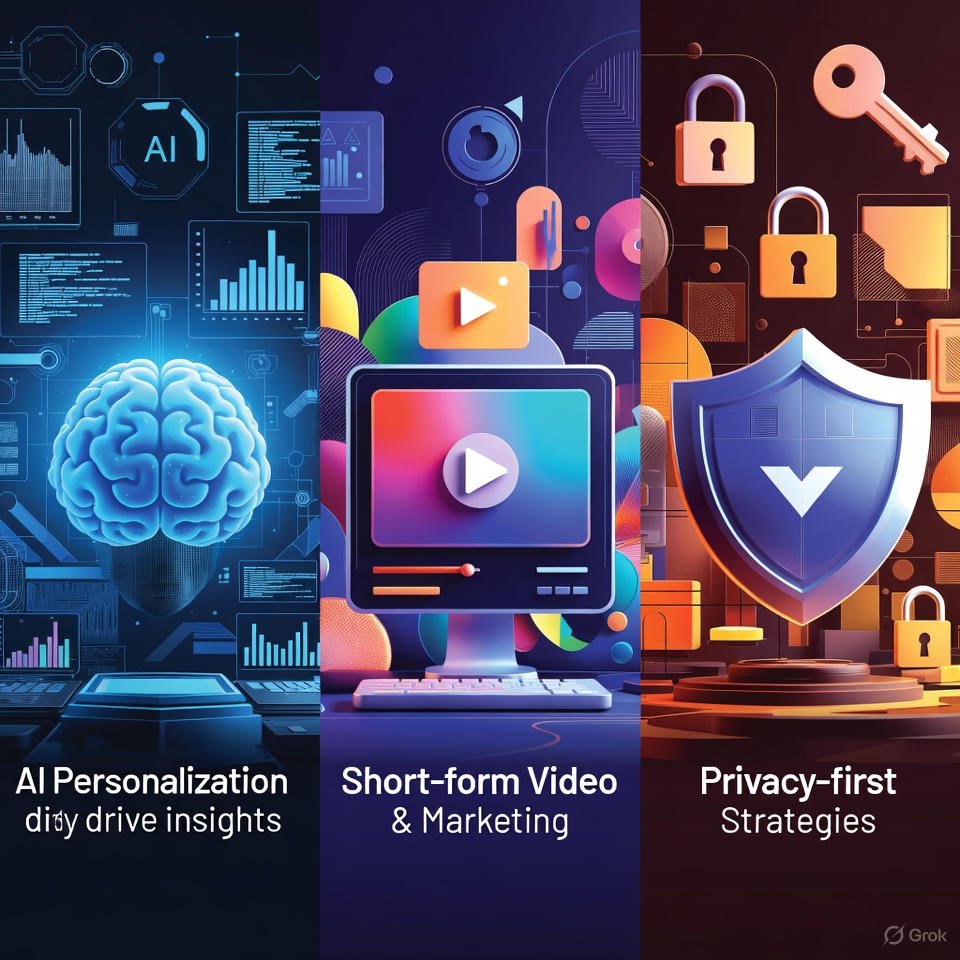
Hyper-personalization is no longer a buzzword but a necessity in 2025. Leveraging AI and big data, brands are tailoring experiences to individual preferences, leading to increased sales and loyalty. According to surveys, 86% of customers report experiencing personalization, and 94% of marketers see it driving revenue growth. This trend involves real-time adjustments to website content, ads, and emails based on user behavior, location, and past interactions.
However, achieving this requires overcoming data silos—only 20% of marketers have fully integrated data systems. Predictive analytics plays a vital role, forecasting customer needs and optimizing marketing mixes. For instance, dynamic content on e-commerce sites can change product displays instantly, reducing bounce rates. Privacy concerns are intertwined here; with regulations like GDPR, brands must prioritize first-party data collected ethically through value exchanges. As one of the pivotal digital marketing industry trends, hyper-personalization demands a balance between customization and respect for user boundaries to foster long-term relationships.
3. The Dominance of Short-Form Video and Social Commerce
Social media continues to dominate, with short-form video leading in ROI at 21%. Platforms like TikTok and Instagram Reels are hubs for authentic, engaging content that drives discovery and sales. In 2025, social commerce integrates shopping directly into apps, enabling seamless purchases via shoppable posts and live streams. This shift turns social platforms into full-fledged marketplaces, with features like TikTok Shop boosting impulse buys.
Video trends emphasize interactivity: polls, AR filters, and user-generated content (UGC) enhance engagement. Brands are partnering with creators for co-created videos that feel genuine, avoiding the pitfalls of “AI slop.” Employee-generated content (EGC) is rising, particularly on LinkedIn, where it builds trust through behind-the-scenes glimpses. With users spending over two hours daily on social media, optimizing for algorithms through consistent posting and community interaction is essential. This trend underscores the need for agility in content strategies to capitalize on viral potential.
4. Authenticity in the Age of AI-Generated Content
As AI floods digital spaces with content, authenticity emerges as a differentiator. Consumers are weary of generic “AI slop,” with negative sentiment surging. Brands succeeding in 2025 prioritize human connections, using emotional intelligence to craft relatable narratives. This involves disclosing AI usage and blending it with human oversight for quality.
Employee advocacy is key: team members sharing personal stories see higher engagement rates, often doubling click-throughs. UGC and reviews serve as trust signals, especially in conversions. For Gen Alpha, content must align with values like sustainability and diversity. Marketers are revitalizing old content with updates and rich media to maintain relevance. In this landscape, authenticity isn’t just ethical—it’s a business imperative, helping brands stand out in overcrowded feeds.
5. Privacy-First Strategies and First-Party Data
Data privacy regulations are reshaping marketing, impacting 88% of strategies. With third-party cookies phasing out, first-party data becomes crucial, collected through consented interactions like loyalty programs. Brands are transforming privacy into an opportunity by offering value in exchange for data, such as personalized recommendations.
Ethical data handling builds trust, with transparent communication about usage. Predictive analytics aids in navigating privacy constraints while optimizing campaigns. This trend aligns with broader digital marketing industry trends toward sustainable practices, where privacy compliance enhances brand reputation and reduces legal risks.
6. Voice Search and Conversational Optimization
Voice search is booming, with billions of assistants in use. Optimizing for conversational queries—long-tail keywords and natural language—is vital for visibility. This includes local SEO for “near me” searches and transactional intents.
AI assistants like Siri and Alexa drive this, requiring content structured for quick, spoken responses. Generative Engine Optimization (GEO) ensures content appears in AI summaries, using structured data and real-time updates. As search shifts from traditional engines to social platforms, adapting to this trend is essential for traffic and conversions.
7. AR and VR for Immersive Brand Experiences
Augmented Reality (AR) and Virtual Reality (VR) are creating immersive interactions, reducing product returns by 64% through virtual try-ons. Platforms like Instagram and TikTok offer AR filters for fun, shareable experiences. VR enables virtual store tours and events, blending physical and digital worlds.
Gamification enhances engagement, with interactive quizzes and rewards. For e-commerce, AR visualizes products in real environments, boosting purchase confidence. This trend fosters deeper emotional connections, making brands memorable in a saturated market.
8. Influencer Marketing with a Focus on Niche Creators
Niche influencers with smaller followings are outperforming mega-influencers in engagement and cost-effectiveness. Long-term partnerships yield authentic content that resonates with targeted audiences. Creator-driven campaigns emphasize co-creation, aligning with community values.
This shift from broad reach to relevance builds loyalty, especially among younger demographics. Measuring ROI through metrics like conversions and sentiment is key. As influencer marketing rises, transparency in disclosures maintains credibility.
9. Omnichannel and Hybrid Marketing Models
Seamless integration of online and offline experiences is critical. Omnichannel strategies ensure consistent messaging across touchpoints, from apps to physical stores. Hybrid models blend digital tools with in-person events for holistic engagement.
This approach leverages data for unified customer views, enhancing satisfaction. In retail, phygital experiences like QR codes in stores drive online traffic. Adaptability to consumer preferences is vital for retention.
10. Sustainability and Community-Led Growth
Sustainability is integral, with brands communicating eco-friendly practices transparently. Community-led growth fosters advocacy through platforms like Discord. Membership models offer exclusive access, combating subscription fatigue with value.
This trend emphasizes ethical marketing, aligning with consumer demands for social responsibility.
Conclusion
As 2025 unfolds, these digital marketing industry trends will shape how brands connect with audiences. Embracing AI, personalization, and authenticity while navigating privacy and technological advancements will be key to success. By staying ahead of these shifts, marketers can create impactful, future-proof strategies.
FAQ
Q1: What is the most impactful AI trend in digital marketing for 2025? A: AI-driven automation and generative content creation stand out, enabling efficient personalization and workflow optimization.
Q2: How can brands ensure authenticity amid AI content? A: By blending AI with human editing, leveraging employee advocacy, and disclosing AI usage to build trust.
Q3: Why is first-party data important in 2025? A: With privacy regulations tightening, first-party data allows ethical personalization without relying on third-party cookies.
Q4: What role does video play in social media marketing? A: Short-form video drives high ROI through engagement and social commerce features like shoppable content.
Q5: How should marketers optimize for voice search? A: Focus on conversational keywords, local SEO, and structured data for AI assistants.
Q6: What benefits do AR/VR offer in marketing? A: They create immersive experiences, reducing returns and enhancing product visualization.
Q7: Why choose niche influencers over larger ones? A: Niche creators offer higher engagement, authenticity, and cost savings for targeted audiences.
Q8: What is omnichannel marketing? A: It’s integrating multiple channels for a seamless customer journey, blending digital and physical touchpoints.
Q9: How does sustainability influence marketing strategies? A: Transparent communication of eco-practices builds loyalty and aligns with consumer values.
Q10: What skills are essential for digital marketers in 2025? A: AI proficiency, soft skills like collaboration, and cross-functional knowledge in finance and growth.