Introduction
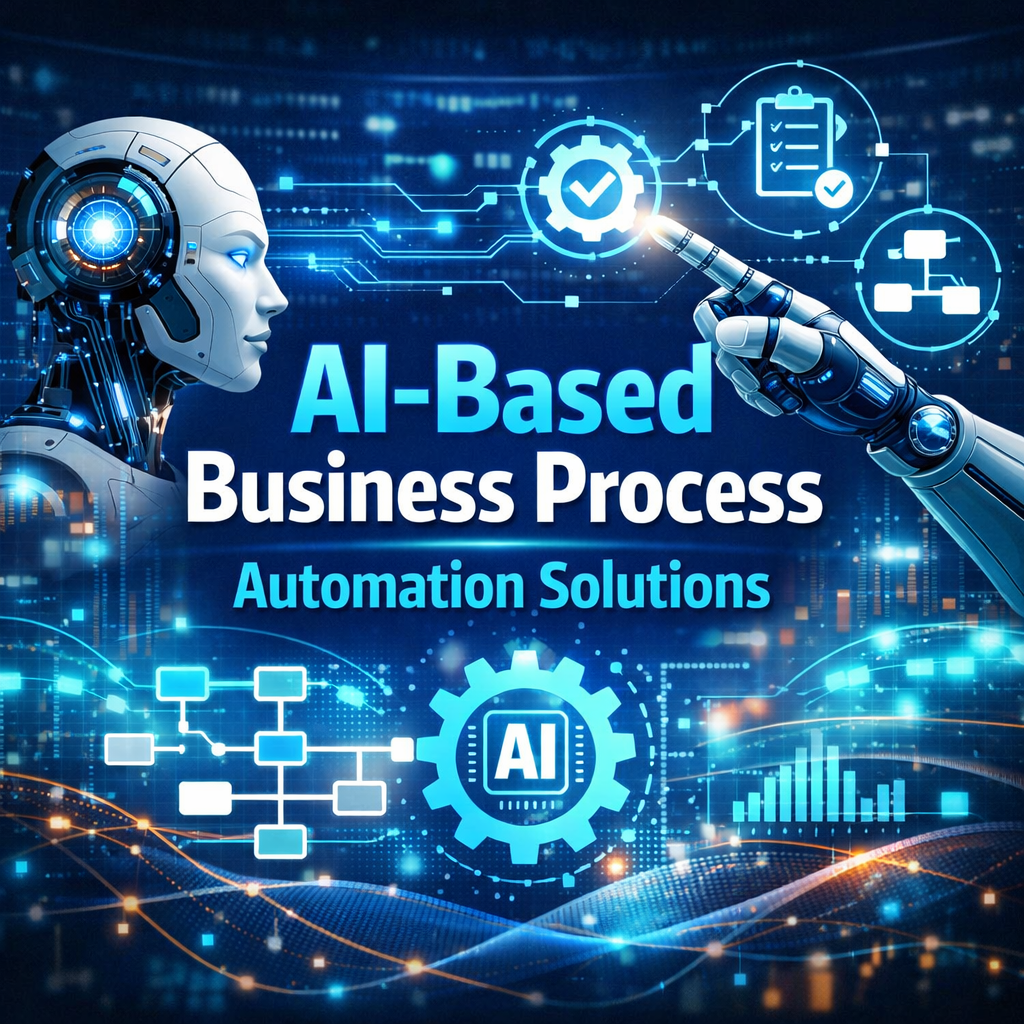
In the rapidly evolving landscape of modern business, efficiency and adaptability are paramount. AI-based business process automation (BPA) solutions represent a transformative approach to streamlining operations, reducing costs, and enhancing productivity. These solutions leverage artificial intelligence technologies such as machine learning, natural language processing, and robotic process automation (RPA) to automate repetitive tasks, predict outcomes, and optimize workflows. As organizations grapple with increasing data volumes and competitive pressures, adopting AI-driven automation has become not just an option but a necessity.
The integration of AI into BPA marks a shift from traditional rule-based systems to intelligent, adaptive processes. For instance, while conventional automation might handle simple data entry, AI-enhanced versions can analyze patterns, make decisions, and even learn from errors. This evolution opens doors to innovative IT business ideas that can revolutionize industries like finance, healthcare, and manufacturing. By automating mundane tasks, businesses free up human resources for more strategic roles, fostering innovation and growth.
In this article, we will explore the fundamentals of AI-based BPA solutions, their benefits, real-world applications, challenges, and future prospects. We’ll also delve into how these technologies inspire innovative IT business ideas, providing a roadmap for entrepreneurs and enterprises alike. With the global BPA market projected to reach $19.6 billion by 2026, understanding these solutions is crucial for staying ahead.
The Evolution of Business Process Automation
Business process automation has roots in the early days of computing, where simple scripts automated basic tasks. However, the advent of AI has elevated BPA to new heights. Traditional BPA relied on predefined rules, but AI introduces cognitive capabilities, allowing systems to handle unstructured data and complex scenarios.
The journey began with RPA in the 2010s, where software bots mimicked human actions. AI’s infusion, often termed Intelligent Process Automation (IPA), adds layers like predictive analytics and computer vision. For example, AI can now automate invoice processing by extracting data from scanned documents, verifying details against databases, and flagging anomalies—all without human intervention.
This progression has sparked numerous innovative IT business ideas. Startups are developing AI platforms that customize automation for small businesses, such as chatbots that handle customer service inquiries while learning from interactions to improve responses. Another idea involves AI-driven supply chain optimizers that predict disruptions using real-time data from IoT devices. These innovative IT business ideas not only solve pain points but also create scalable revenue streams through subscription models.
As AI algorithms become more sophisticated, BPA solutions are evolving into ecosystem enablers, integrating with cloud services and big data analytics. This holistic approach ensures that automation isn’t siloed but part of a broader digital transformation strategy.
Key Components of AI-Based BPA Solutions
At the core of AI-based BPA are several interconnected components that work in tandem to deliver seamless automation.
First, Machine Learning (ML) algorithms form the brain of these systems. ML models train on historical data to identify patterns and make predictions. In procurement processes, for instance, ML can forecast inventory needs, automating reorder triggers and reducing stockouts.
Second, Natural Language Processing (NLP) enables interaction with human language. This is vital for automating customer support or legal document reviews, where NLP parses emails or contracts to extract key information and route them appropriately.
Third, Robotic Process Automation (RPA) acts as the executor, performing tasks like data migration or report generation. When combined with AI, RPA bots become “intelligent,” adapting to changes in user interfaces or data formats.
Additionally, Computer Vision allows automation of visual tasks, such as quality control in manufacturing, where AI scans products for defects.
Integration platforms like APIs and middleware ensure these components connect with existing enterprise systems, such as ERP or CRM software. Security features, including AI-driven threat detection, safeguard automated processes against cyber risks.
Entrepreneurs exploring innovative IT business ideas can capitalize on these components by creating niche solutions. For example, a startup could develop an AI tool specifically for automating HR onboarding, using NLP to process resumes and ML to match candidates with roles. Such targeted innovations address specific industry needs, making them highly marketable.
Benefits of Implementing AI-Based BPA
The advantages of AI-based BPA solutions are multifaceted, impacting operational efficiency, cost savings, and strategic decision-making.
Primarily, cost reduction is achieved by minimizing manual labor. Studies show that automation can cut processing times by up to 80%, allowing employees to focus on high-value activities. This efficiency translates to lower operational costs and higher profitability.
Improved accuracy is another key benefit. Human errors in data entry or analysis can be costly, but AI systems maintain consistency, reducing mistakes in areas like financial reporting or compliance checks.
Scalability is enhanced as AI solutions handle increased workloads without proportional resource hikes. During peak seasons, e-commerce businesses can automate order fulfillment, scaling operations effortlessly.
Moreover, enhanced customer experience arises from faster response times and personalized services. AI chatbots, for instance, provide 24/7 support, analyzing customer queries to deliver tailored solutions.
From a strategic viewpoint, AI-based BPA generates actionable insights through data analytics. By automating data collection and analysis, businesses uncover trends that inform decisions, such as market expansions or product developments.
These benefits inspire innovative IT business ideas, like AI platforms for predictive maintenance in industries. A company could offer subscription-based services where AI monitors equipment health, preventing downtime and saving clients millions.
Real-World Applications and Case Studies
AI-based BPA is already transforming various sectors with tangible results.
In finance, banks use AI to automate fraud detection. Machine learning models analyze transaction patterns in real-time, flagging suspicious activities and automating alerts. JPMorgan Chase, for example, employs AI-driven automation to process legal documents, saving thousands of hours annually.
Healthcare benefits from automating administrative tasks. AI systems handle patient scheduling, billing, and even diagnostic support. Cleveland Clinic uses AI to streamline electronic health records, reducing administrative burdens on staff.
In manufacturing, AI optimizes production lines. General Electric integrates AI with IoT for predictive maintenance, automating sensor data analysis to foresee equipment failures.
Retail sees AI automating inventory management. Amazon’s warehouses use AI robots for picking and packing, enhancing speed and accuracy.
These applications highlight innovative IT business ideas. A startup could create an AI solution for sustainable supply chains, automating carbon footprint tracking and optimization, appealing to eco-conscious enterprises.
Case in point: UiPath, a leader in RPA, has evolved into AI-centric solutions, partnering with companies to automate complex processes, demonstrating how blending AI with BPA creates market leaders.
Challenges and Solutions in Adoption
Despite the promise, adopting AI-based BPA isn’t without hurdles.
Integration complexities arise when legacy systems clash with new AI tools. Solutions involve phased implementations and using hybrid clouds for seamless connectivity.
Data privacy and security concerns are paramount, especially with AI handling sensitive information. Compliance with regulations like GDPR requires robust encryption and AI ethics frameworks.
Skill gaps in the workforce can impede adoption. Training programs and user-friendly AI interfaces mitigate this, empowering employees to leverage automation.
High initial costs deter small businesses, but cloud-based SaaS models offer affordable entry points.
Addressing these challenges fosters innovative IT business ideas, such as consulting firms specializing in AI-BPA integration, providing customized roadmaps and training.
By proactively tackling obstacles, organizations can maximize ROI from AI automation.
Future Trends in AI-Based BPA
Looking ahead, AI-based BPA will be shaped by emerging technologies.
Hyperautomation will combine AI, RPA, and other tools for end-to-end process automation, minimizing human involvement.
Edge AI will enable real-time processing on devices, ideal for IoT-heavy industries like logistics.
Explainable AI will build trust by making decisions transparent, crucial for regulated sectors.
Sustainability will drive green AI solutions, optimizing energy use in automation.
These trends open avenues for innovative IT business ideas, like AI platforms for collaborative automation across global teams, using blockchain for secure data sharing.
As AI evolves, BPA solutions will become more intuitive, predictive, and integral to business strategy.
Conclusion
AI-based business process automation solutions are reshaping how organizations operate, offering unprecedented efficiency and innovation. From cost savings to enhanced decision-making, the benefits are clear, though challenges like integration must be navigated. As we embrace these technologies, they not only streamline processes but also inspire a wave of innovative IT business ideas that propel industries forward. Businesses that invest in AI-BPA today will lead tomorrow’s digital economy.
FAQ
What are AI-based business process automation solutions?
AI-based BPA solutions use artificial intelligence to automate and optimize business workflows, incorporating technologies like ML and NLP for intelligent task handling.
How do AI-based BPA solutions differ from traditional automation?
Traditional automation follows fixed rules, while AI-based versions learn from data, adapt to changes, and handle complex, unstructured information.
What industries benefit most from AI-based BPA?
Finance, healthcare, manufacturing, retail, and logistics see significant gains, with automation reducing costs and improving efficiency.
What are some challenges in implementing AI-based BPA?
Key challenges include system integration, data security, skill shortages, and initial costs, which can be addressed through strategic planning and training.
How can small businesses adopt AI-based BPA?
Small businesses can start with cloud-based, affordable SaaS tools that require minimal setup, scaling as they grow.
What future trends should we watch in AI-based BPA?
Trends include hyperautomation, edge AI, explainable AI, and sustainable practices, all enhancing automation’s capabilities.
Can AI-based BPA replace human jobs?
While it automates routine tasks, it creates opportunities for humans in creative, strategic roles, augmenting rather than replacing workforce.
How secure are AI-based BPA solutions?
With proper encryption, compliance measures, and AI-driven threat detection, these solutions can be highly secure, though ongoing vigilance is essential.
What role do innovative IT business ideas play in AI-based BPA?
Innovative IT business ideas drive the development of niche AI tools, customizing automation for specific needs and creating new market opportunities.