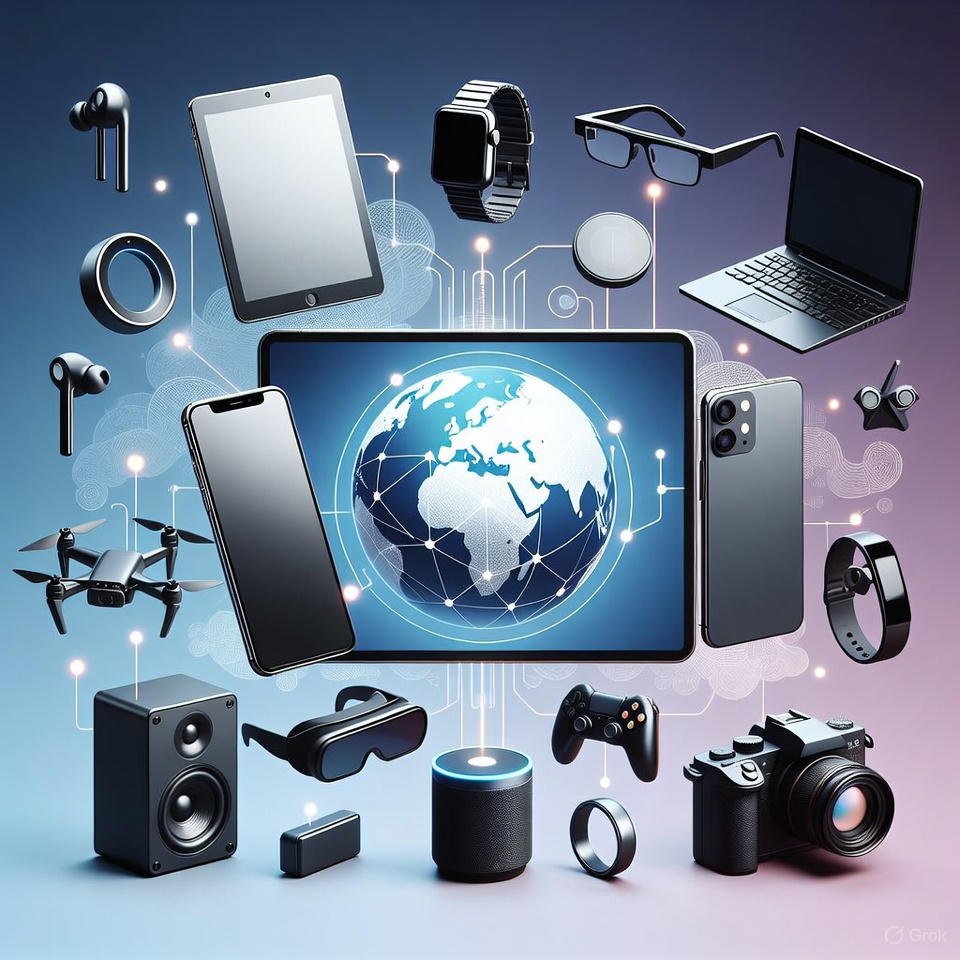
In the ever-evolving landscape of technology, the smartphone has reigned supreme for over a decade, transforming how we communicate, work, and entertain ourselves. However, as we approach the late 2020s, a shift is underway. Tech giants envision future beyond smartphones, where devices become more seamless, immersive, and integrated into our daily lives. This transition isn’t about abandoning the smartphone entirely but evolving beyond its limitations—such as screen dependency, battery constraints, and form factor restrictions. Companies like Apple, Google, Meta, Microsoft, and emerging players are investing billions in research and development to pioneer this new era. From augmented reality (AR) glasses to AI-driven wearables and ambient computing ecosystems, the preparations are multifaceted and ambitious.
The smartphone market, while still lucrative, shows signs of saturation. Global shipments have plateaued, with consumers holding onto devices longer due to incremental upgrades. According to recent analyses, the next big opportunity lies in a “$3 trillion” post-smartphone world, driven by AR, AI, and beyond. Tech giants envision future beyond smartphones as one where computing is ubiquitous, invisible, and always-on, blending the physical and digital realms. This article explores how these companies are gearing up, the technologies they’re betting on, and the implications for consumers and society. We’ll delve into specific strategies, highlight key innovations, and address potential challenges, culminating in a forward-looking FAQ.
The Rise of Augmented and Virtual Reality
One of the most prominent paths beyond smartphones is through AR and VR technologies. These immersive tools promise to overlay digital information onto the real world or create entirely virtual environments, reducing our reliance on handheld screens.
Meta, formerly Facebook, has been at the forefront with its Quest series of VR headsets and recent prototypes like Orion AR glasses. In 2025, Meta showcased advanced prototypes at events like SIGGRAPH, including “Tiramisu” and “Boba 3,” which demonstrate high-resolution displays and mixed-reality capabilities. These devices aim to make virtual meetings, gaming, and social interactions more lifelike. Mark Zuckerberg has repeatedly emphasized that AR glasses could replace smartphones for everyday tasks like navigation, communication, and entertainment. Meta’s investment in the metaverse, despite early setbacks, underscores their commitment. By partnering with hardware manufacturers and developing custom silicon, Meta is building an ecosystem where users can seamlessly switch between realities.
Apple, on the other hand, entered the fray with its Vision Pro headset in 2023, evolving it into more consumer-friendly iterations by 2025. Apple’s approach focuses on “spatial computing,” where devices understand and interact with the user’s environment. Rumors suggest Apple is developing lightweight AR glasses that integrate with its existing ecosystem, including iPhones and Macs. This strategy leverages Apple’s strength in seamless integration—imagine glancing at your wrist or through glasses to access notifications without pulling out a phone. Tech giants envision future beyond smartphones through such innovations, where AR becomes the new interface.
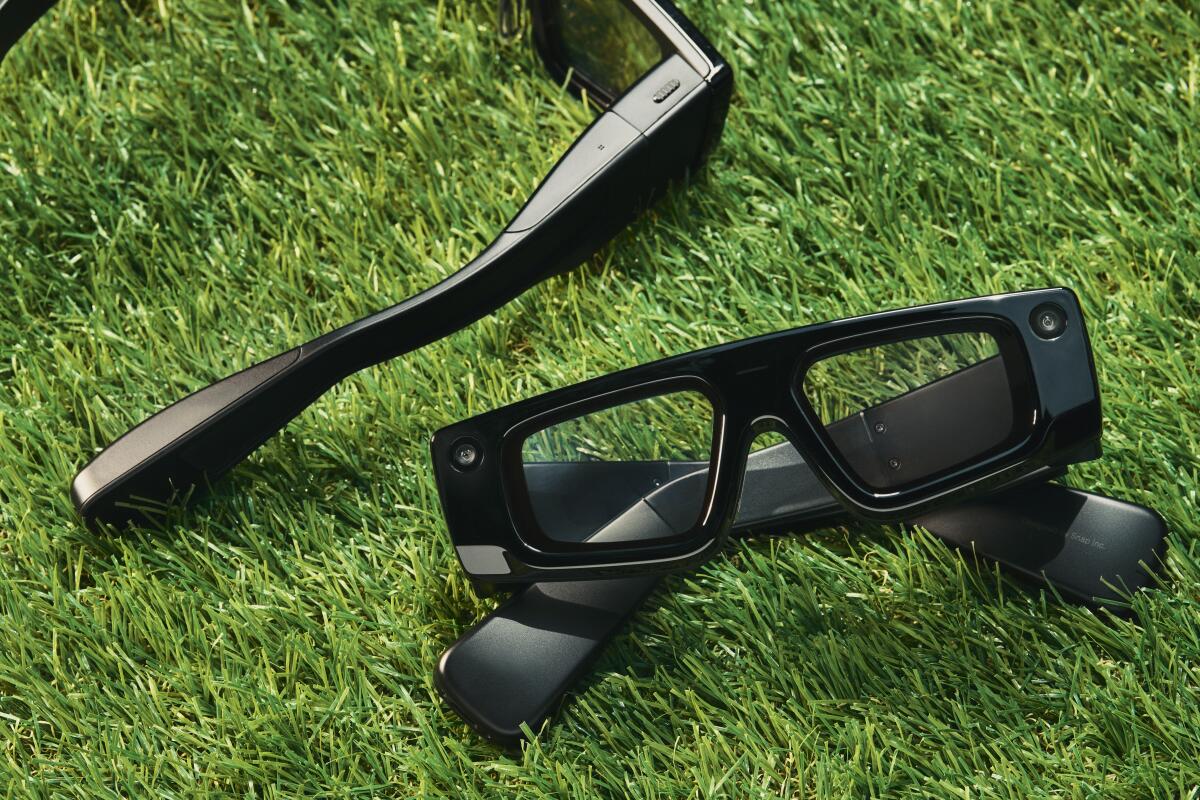
Snap bets big on augmented reality glasses as tech race heats up – Los Angeles Times
Google, too, is not idle. After the mixed reception of Google Glass in the 2010s, the company has pivoted to more sophisticated AR projects. In collaboration with Samsung and Qualcomm, Google is pushing Android XR, a platform for extended reality devices. Their 2025 prototypes include smart glasses with real-time translation and AI-assisted vision, powered by Gemini models. Google’s advantage lies in its vast data ecosystem, enabling personalized experiences like contextual search overlaid on the real world.
Smaller players and startups are also influencing this space. Snap Inc. has bet big on AR with its Spectacles glasses, which in 2024 and 2025 iterations feature advanced lenses for social AR experiences. These devices allow users to share augmented filters and effects in real-time, hinting at a social future untethered from phones.
Challenges in AR/VR include battery life, comfort, and privacy. Headsets remain bulky, and extended use can cause fatigue. Moreover, data collection in always-on devices raises ethical questions. Despite this, investments continue to pour in, with projections estimating the AR/VR market to reach hundreds of billions by 2030.
Wearables: The Bridge to a Screenless Future
Wearables represent a crucial stepping stone in preparing for life beyond smartphones. These devices, from smartwatches to AI pins, extend functionality without demanding constant attention.
Apple’s Apple Watch has evolved from a fitness tracker to a standalone communication tool, with cellular capabilities allowing users to leave their iPhones behind. By 2025, features like advanced health monitoring— including blood pressure and glucose sensing—position it as a health companion. Apple’s ecosystem integration ensures that wearables complement rather than replace smartphones initially, but the trajectory points toward independence.
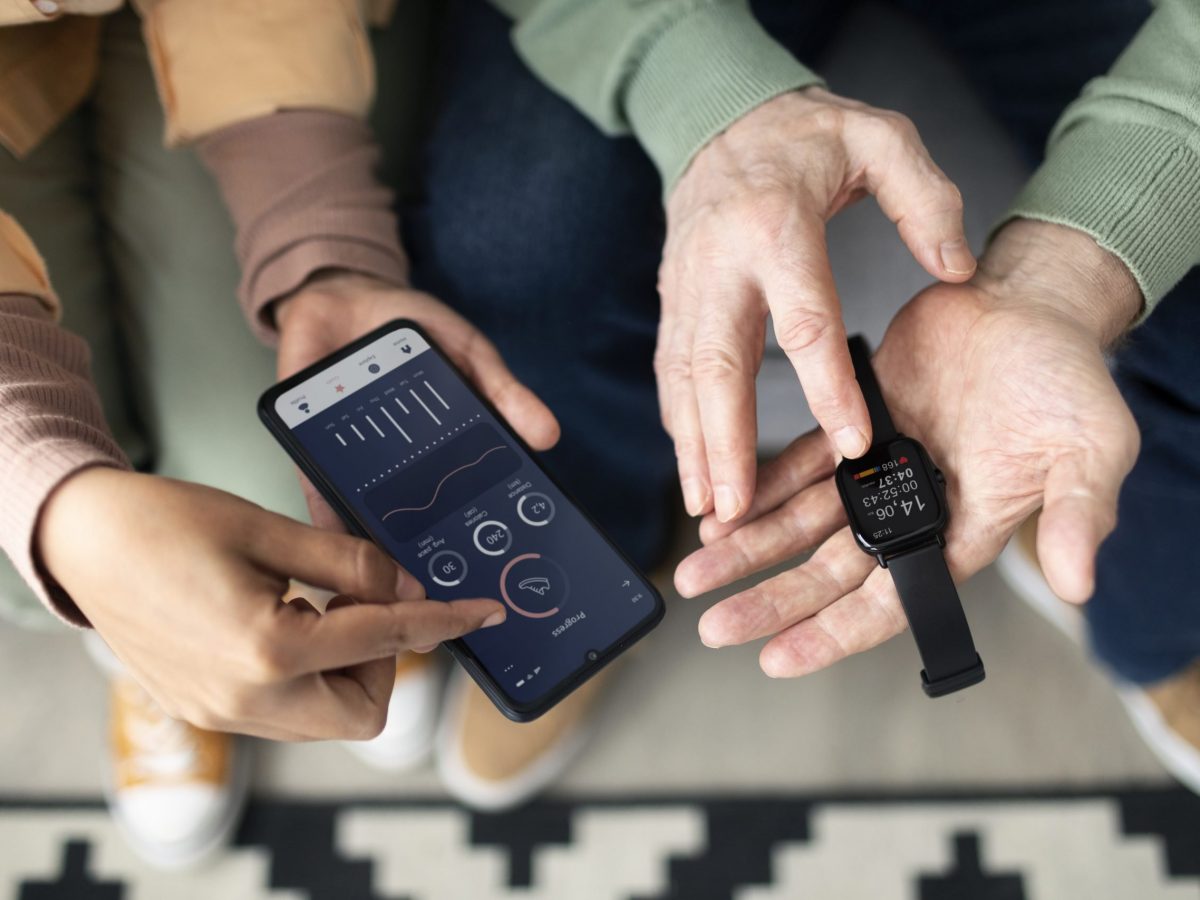
Health At Hand: Evolution, Impact, & Future Of Wearable Devices | Wellable
Google’s Pixel Watch and Fitbit line emphasize AI-driven insights. Using machine learning, these devices predict user needs, such as suggesting workouts or reminding about medications. Google’s acquisition of Fitbit has bolstered its health data capabilities, aligning with a future where wearables handle proactive computing.
Emerging wearables like Humane’s Ai Pin challenge the status quo. Launched in 2024, this screenless device uses voice, gestures, and projections to interact, powered by AI. It represents a bold vision: a world where computing is ambient and hands-free. While adoption has been slow due to usability issues, it exemplifies how tech giants envision future beyond smartphones—through minimalist, AI-centric hardware.
Samsung and Huawei are pushing foldables and rings as transitional devices. Samsung’s Galaxy Ring, introduced in 2024, tracks biometrics discreetly, feeding data into an AI ecosystem. These wearables collect vast amounts of user data to refine algorithms, preparing for more advanced integrations.
The wearable market is projected to grow exponentially, with AI enhancing personalization. However, issues like data privacy and interoperability persist. Standardizing protocols across brands will be key to widespread adoption.
AI Companions and Brain-Computer Interfaces
Artificial intelligence is the linchpin in the post-smartphone world, enabling devices to anticipate needs without explicit input.
Microsoft’s Copilot and Azure AI integrations extend to wearables and smart home devices, creating an “ambient intelligence” network. By 2025, Microsoft’s partnerships with hardware makers allow AI to roam across devices, from PCs to glasses. This “copilot everywhere” strategy reduces smartphone dependency by offloading tasks to cloud-based AI.
Neuralink, backed by Elon Musk, pushes boundaries with brain-computer interfaces (BCIs). While still experimental, 2025 trials show promise in controlling devices via thoughts. Tech giants envision future beyond smartphones incorporating BCIs for seamless interaction, potentially revolutionizing accessibility for disabled individuals.
Amazon’s Alexa and Echo devices evolve into more proactive AI companions, integrating with AR for visual aids. Their focus on ambient computing—where devices listen and respond contextually—prepares for a screenless era.
AI’s ethical implications, including bias and job displacement, must be addressed. Regulatory frameworks are emerging, but innovation outpaces them.
Ambient Computing: The Invisible Revolution
Ambient computing envisions technology fading into the background, always available but never intrusive. This paradigm shift is central to preparations beyond smartphones.
Google’s Nest ecosystem exemplifies this, with smart thermostats, cameras, and displays creating interconnected homes. By leveraging AI, these devices learn habits and automate routines, reducing the need for manual smartphone control.
Apple’s HomeKit and Matter protocol push interoperability, allowing devices from different brands to communicate. This builds a foundation for ubiquitous computing, where your environment anticipates needs—like adjusting lights based on your mood detected via wearables.

Ambient Computing: What Is It & How Will It Change Our lives? –
Meta’s Ray-Ban smart glasses, co-developed with EssilorLuxottica, integrate ambient features like audio streaming and photo capture. These subtle wearables hint at a future where computing is embedded in everyday objects.
Challenges include energy efficiency and security. Always-on devices consume power and are vulnerable to hacks. Advancements in edge computing and quantum-resistant encryption are addressing these.
Investments and Collaborations
To realize this vision, tech giants are pouring resources into R&D. In 2025, collective investments in AR/VR and AI exceed trillions. Collaborations are key: Apple with TSMC for custom chips, Google with Arm for efficient processors.
Acquisitions accelerate progress. Meta’s purchase of CTRL-labs for gesture control, Microsoft’s GitHub for AI tools—these bolster capabilities.
Startups like Nothing and Rabbit are innovating with devices like the Rabbit R1, an AI handheld that queries the world without apps. While not giants, their ideas influence the industry.
Societal and Economic Impacts
This shift promises enhanced productivity and accessibility but risks widening digital divides. Affordability and education will determine equitable access.
Economically, new markets emerge: AR content creation, AI ethics consulting. Jobs in hardware may decline, but software and data roles surge.
Environmentally, sustainable manufacturing is crucial. E-waste from outdated smartphones is a concern; recyclable materials and modular designs are priorities.
The Road Ahead
As we stand on the cusp of this transformation, the preparations are clear: diversification into AR, wearables, AI, and ambient systems. Tech giants envision future beyond smartphones as collaborative, immersive, and intelligent. While smartphones will persist, their role will diminish, much like feature phones did post-iPhone.
In conclusion, the post-smartphone world is not a distant dream but an unfolding reality. By investing in cutting-edge tech and addressing hurdles, these companies are shaping a future where technology enhances life without dominating it.
FAQ
Q: What does “beyond smartphones” really mean? A: It refers to a computing paradigm where devices are more integrated, like AR glasses or ambient systems, reducing reliance on handheld screens.
Q: Which company is leading in AR/VR? A: Meta with its Quest and Orion prototypes, but Apple and Google are close contenders with Vision Pro and Android XR.
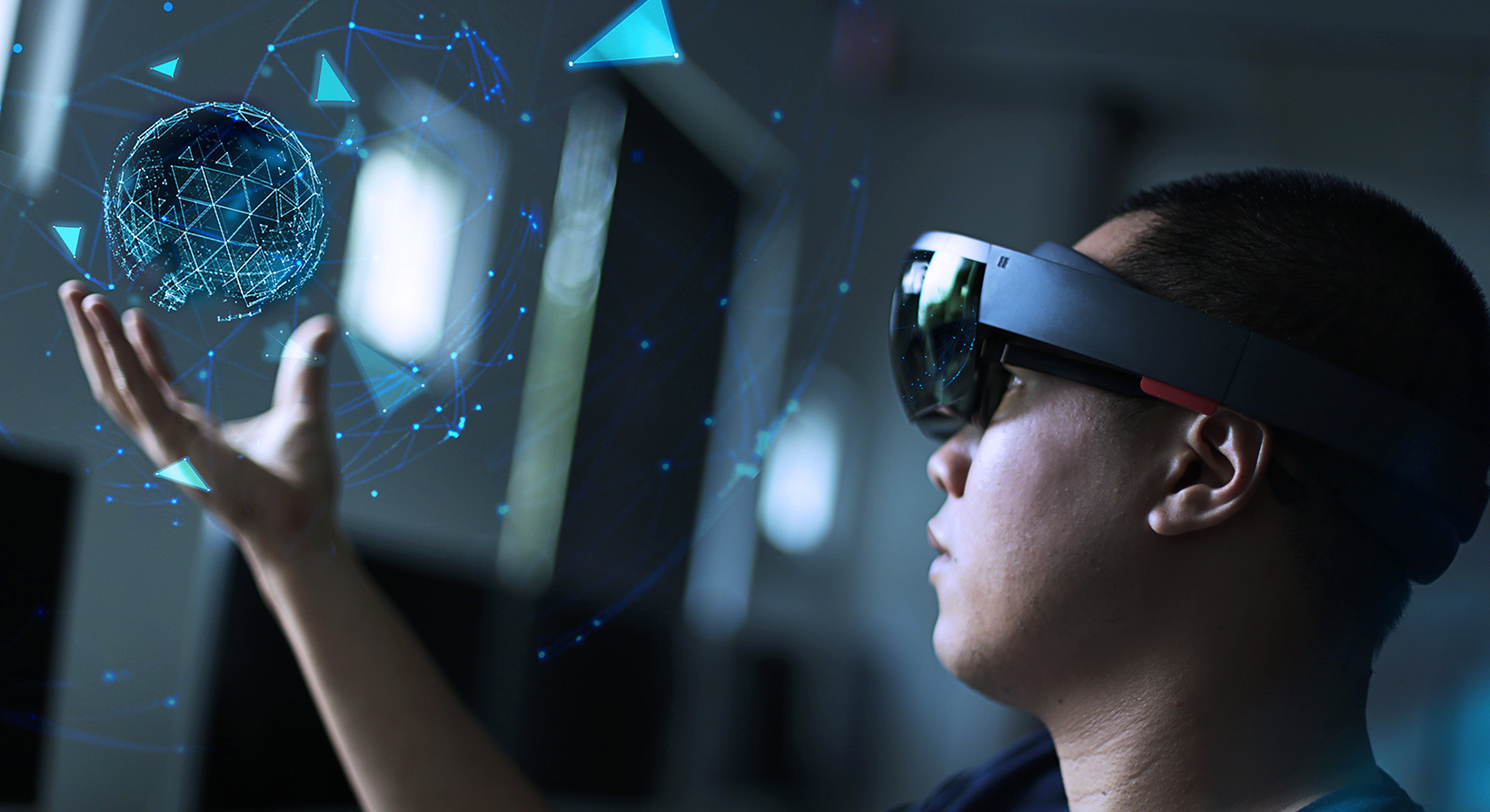
The Future of AR/VR Headset Design is Hybrid – Stambol
Q: Are BCIs realistic for everyday use? A: Currently experimental, but advancements by Neuralink suggest viability within a decade for specific applications.
Q: How will privacy be handled in ambient computing? A: Through on-device processing, encryption, and user controls, though regulations like GDPR will play a key role.
Q: When can we expect mainstream adoption? A: Projections indicate widespread use of AR glasses and AI wearables by 2030-2035.



Comments are closed.